
The Gentlest Thing You Can Do for Yourself, Forgive You...
- Margie💛

- Jun 4
- 10 min read

"You are living this life for the first time. Nobody knows what they are doing. That includes you. And that is okay."
Hey Sunny, 💛
Life has been lifing. That is the only way I know how to describe the past couple of weeks. But I am back now, a little worn, a little wiser, and with something important sitting on my heart that I have been wanting to share for a while. Today we are talking about self-forgiveness. Not the glossy, aesthetic version of it. The real, uncomfortable, deeply necessary kind. 💜
💌: If you missed last week's newsletter where I got vulnerable about this topic, subscribe to the blog to get exclusive monthly letters straight to your inbox. That one was a big one. You'll want to read it. 🌙
The Honest Part First...

I have been struggling with self-forgiveness for a long time. And if you have been listening to the podcast or reading the newsletter, you already know a little of why. But let me say it plainly here too: I made mistakes in the first few years of my adulthood that I am still living with the consequences of today. Some of what happened was not my fault. Some of it, I played a part in. And learning to hold both of those truths at the same time without collapsing into shame or denial has been one of the hardest things I have ever done.
It has been two years since I started over. Two whole years of rebuilding from scratch, friendships, sense of self, plans, dreams, everything. And most days I am grateful for how far I have come. But some days I look at where I am and I compare it to where I thought I would be, and something in me gets very quiet and very critical. I start asking the questions that have no kind answers: what if I had made different choices? What if I hadn't allowed that? How much further along would I be?
And then I have to gently, firmly remind myself: I was a young adult navigating life the best way I knew how. I did not have a manual. I did not have experience. I had good intentions and incomplete information and a heart that was doing its best. That deserves compassion. Not a lifetime sentence.
A note to myself, and maybe to you too:
Comparing your present mistakes to the darkest season of your past is not fair. It is not an accurate measure of who you are or how far you have come. You are not that season anymore. You learned from it. You survived it. You are still here, still trying, still growing. That counts for everything.
What Is Self-Forgiveness, really?
because I used to think it meant something it didn't...
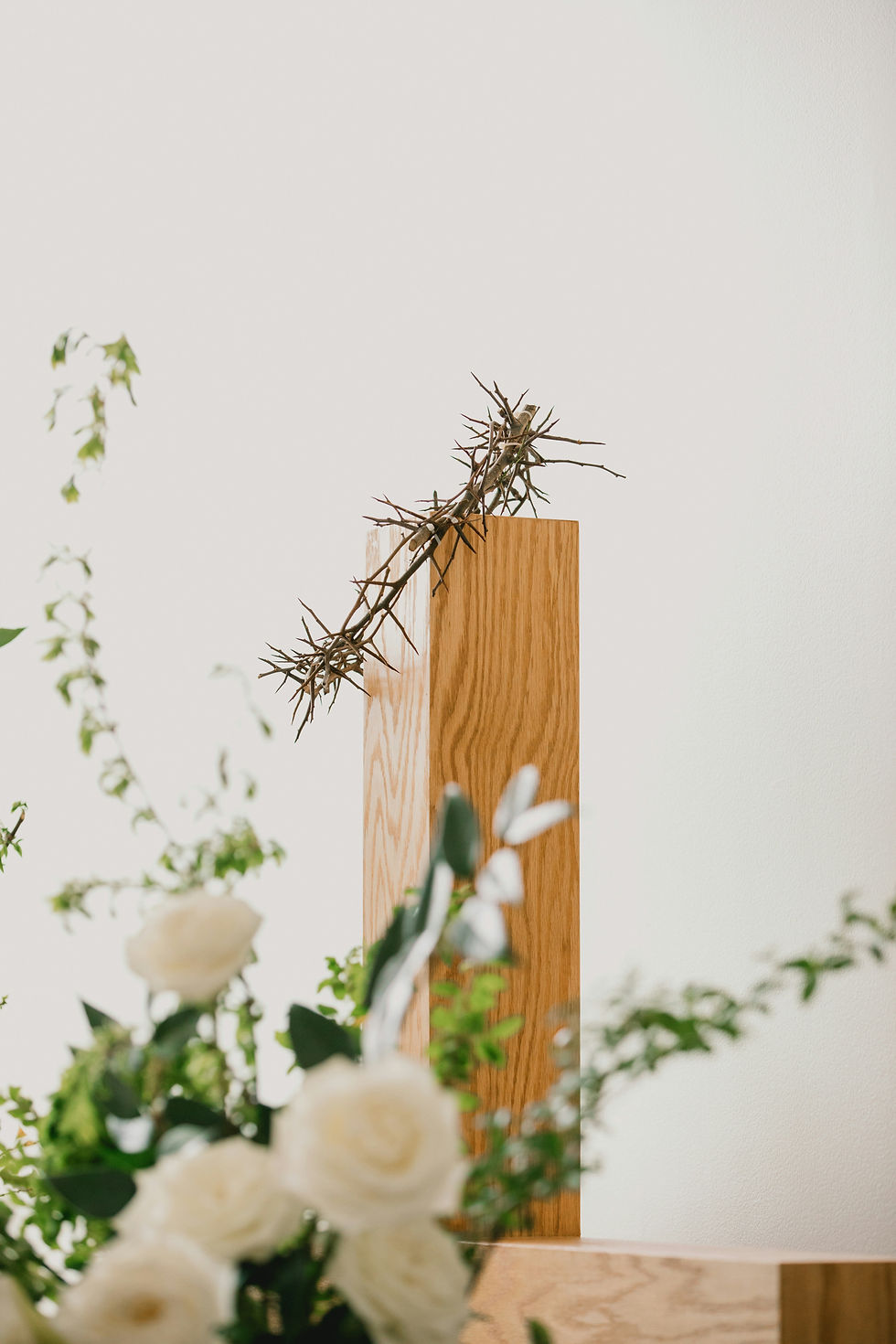
For a long time, I had a very specific idea of what forgiveness meant and it took me a while to realize that idea was incomplete. I thought forgiveness meant moving on. Letting go. Pretending the thing didn't happen or that it didn't matter. And because I couldn't do any of those things because it did happen and it did matter, I told myself I hadn't forgiven myself yet. That I wasn't ready. That maybe I never would be.
So, what does self-forgiveness actually mean?
Self-forgiveness is the conscious, compassionate decision to release yourself from the ongoing punishment of your past mistakes, not by excusing them, not by pretending they didn't happen, and not by avoiding accountability, but by choosing to no longer use those mistakes as evidence that you are fundamentally broken, unworthy or beyond redemption. It is the practice of extending to yourself the same grace, patience and understanding that you would offer to someone you deeply love who had made the same mistake. It is not a one-time event. It is a daily, sometimes hourly, deeply human practice. And it is one of the most radical acts of self-love there is.
Back when I first learned about forgiveness, someone told me it simply meant moving on from your mistakes and learning from them. And while that is part of it, I think it goes so much deeper. Because you can technically "move on" while still dragging the weight of the past behind you. You can leave a situation behind physically while mentally re-living it every day. Real self-forgiveness is internal. It is the moment you stop using your past as a case against yourself. And that takes work. Real, patient, ongoing work.
It also requires something that does not come naturally to many of us: empathy for ourselves. The same empathy we extend to others when they make mistakes, when they were young and didn't know better, when they were going through something hard and made choices they later regretted. We give that grace to everyone else so freely. We are allowed to give it to ourselves too.
Why Self-Forgiveness Is So Hard...

If self-forgiveness were easy, we would all be doing it. The truth is that for most of us and I include myself firmly in this, it is one of the hardest things we will ever attempt. And there are real reasons for that. Reasons worth understanding, because understanding why something is hard is often the first step toward making it a little less hard.
Many of us were raised in environments, families, schools, cultures, that taught us that mistakes are shameful. That being wrong means being bad. That the appropriate response to failure is punishment, not compassion. And so, we internalized a very harsh inner critic who is very good at its job and very reluctant to take time off.
There is also the comparison trap, the one I fall into regularly. We look at everyone around us and measure our insides against their outsides. We see where other people are and we assume they got there without the detours, without the mistakes, without the seasons of starting over. And we feel behind. Like we used up our chances. Like everyone else figured it out and we were the only ones stumbling. Spoiler: everyone is stumbling. Some people are just quieter about it.
And then there is accountability, the complicated dance between owning your part in something and not letting that ownership swallow you whole. Accountability and self-compassion are not opposites. You can say "I made a mistake" and "I deserve kindness" in the same breath. In fact, real growth requires both. One without the other is either denial or self-destruction. Neither one heals anything.
How to Begin Forgiving Yourself ...
not a checklist, a gentle, honest guide...

I want to be clear about something before we get into this: self-forgiveness is not a one-time process. It is part of healing. And we all know, we have said it many times in this space, that healing is not linear. So, these are not steps to complete once and cross off a list. They are practices to return to, again and again, with patience and gentleness, on the days it is easy and especially on the days it is not. 💜
🌙 01. Acknowledge What Happened, honestly...
Self-forgiveness cannot begin in denial. Before you can forgive yourself, you have to be honest about what happened, what you did, what you experienced, what role you played, and what you are still carrying. Not to punish yourself with that honesty, but to see it clearly. You cannot release what you refuse to look at. Sit with it. Name it. Let it be real. That is where the healing begins.
💜 02. Separate Accountability from Self-Punishment...
There is a very important difference between taking responsibility for your actions and using those actions as a reason to treat yourself cruelly. Accountability says: "I made a mistake and I want to understand it so I can do better." Self-punishment says: "I made a mistake and I deserve to suffer for it indefinitely." One leads to growth. The other leads to stagnation. You are allowed and actually required to take responsibility without also taking on a life sentence of shame.
🌸 03. Extend Yourself the Empathy You Give Others
This is the one I come back to most often. If your best friend told you about the exact same mistake, you are punishing yourself for, what would you say to her? Would you tell her she is stupid? That she deserves to suffer? That she should have known better and has no right to move forward? Of course not. You would hold her with kindness. You would remind her of her circumstances. You would tell her she is more than her worst moments. Now say all of that to yourself. You deserve that same voice.
✦ 04. Understand the Context You Were In...
You were not making decisions in a vacuum. You were making decisions as a specific person, at a specific age, with specific experiences, in specific circumstances. The nineteen-year-old who made mistakes while navigating trauma and adulthood for the first time was doing the best she could with what she had at the time. The same applies to you, whatever age, whatever season. Context matters enormously. Give yourself the full picture, not just the verdict.
🌿 05. Stop Comparing Your Journey to Everyone Else's...
One of the cruelest things we do to ourselves is measure our progress against other people's highlight reels. Everybody's path looks different. Some people didn't have the detours you had, but they also didn't learn what you learned from them. Some people are further in certain areas and behind in others. You are not running the same race as anyone else. You are on your own timeline, and your timeline is valid, detours, restarts, slow seasons and all.
📓 06. Write It Out. Give the Feeling a Page...
Sometimes the things that live inside us become lighter when we let them out. Journal about the thing you are struggling to forgive yourself for. Write it from the perspective of your harshest inner critic and then write a response from the perspective of someone who loves you unconditionally. The compassionate voice often knows things the critical one has forgotten. Let it speak. It has been waiting a long time.
💛 07. Allow Yourself to Grieve What You Lost...
Sometimes what makes self-forgiveness so hard is that the mistakes we made cost us something real, time, relationships, opportunities, a version of a life we had imagined. And before we can forgive ourselves, we may need to grieve those losses properly. Not to wallow in them, but to honor that something mattered, something was lost, and that grief is a reasonable and human response to that. You are allowed to mourn. And then, when you are ready, you are allowed to move forward.
🧠 08. Seek Support. You Do Not Have to Do This Alone...
Therapy, trusted friendships, communities of people who understand these are not signs of weakness. They are resources. Self-forgiveness is hard enough without trying to navigate it in complete isolation. A good therapist can help you work through the roots of self-blame in ways that journaling alone cannot reach. A trusted friend can reflect back to you the grace you cannot yet give yourself. Ask for help.
🌷 09. Be Patient with the Process...
Self-forgiveness is not a switch you flip once and leave on. It is a practice you return to, sometimes daily, sometimes in the middle of the night when the old thoughts come back, sometimes when something in your present life triggers a memory of the past. That is the non-linear, deeply human nature of healing. Every time you choose compassion over criticism, even for a moment, that is progress. It counts. All of it counts.
✿ 10. Remind Yourself. You Are Still Here...
You survived the thing you are trying to forgive yourself for. You are still standing. Still learning. Still showing up. Still choosing growth on days when giving up would have been so much easier. That is not the story of someone who is broken beyond repair. That is the story of someone who is remarkably, quietly, stubbornly resilient. Remember that on the hard days. You are still here. And still being here is everything.
One Last Thing, From Me to You 💛

I am not writing this from a place of having arrived. I am writing this from the middle of the journey, some days ahead of where I was, some days circling back to the same old questions. And I think that is okay. I think that is actually what the journey looks like for most of us. Not a clean arc from broken to healed. More like a spiral, revisiting, releasing, revisiting again, releasing a little more each time.
What I know for certain is this: the fact that you want to forgive yourself means something. It means you care. It means you are paying attention. It means some part of you believes you are worth the effort of healing. And that part is right. You are worth every uncomfortable, necessary, tender step of this process.
Be patient with yourself. That is what I am learning to do. And I hope that you will learn it alongside me. 🌸
💛 To My Sunnies...

You are reading this and something landed, if you recognized yourself in the self-blame, the comparisons, the quiet grief of choices you wish you could undo, I want you to know that you are in very good company here. This space was built for exactly this kind of honest conversation. And you showing up for it, even when it is uncomfortable, says everything about who you are. 🌙
You were young once. You were navigating things you had no map for. You made choices with incomplete information and a heart that was doing its best. That is not stupidity. That is being human for the first time. We are all doing this for the first time. Nobody knows what they are doing, including me, including the people whose lives look the most put together from the outside. We are all figuring it out together.
So today, and tomorrow, and on every day that the old shame tries to come back, try to speak to yourself the way you would speak to someone you love. Just once. Just for a moment. And then do it again. That is how the voice changes. One kind word at a time. 💛
💜 ✦ 🌙 ✦ 💜
The Healing Conversations Live Here...
come back whenever you need a soft place to land
If this post gave you something to sit with, subscribe to the blog so the next honest, tender conversation finds you wherever you are. A new post every week, written with care and with you in mind.
Come find me on Instagram, @_.se;fcare_diary, I genuinely want to know how you are doing with self-forgiveness. Tell me everything. No judgment. Only growth. And for longer, deeper conversations, the podcast, Navigating Life diaries, is always waiting. 🎙️


Comments